Free entrance
Performance in Hungarian, with print handouts of the lyrics in English and Hungarian.
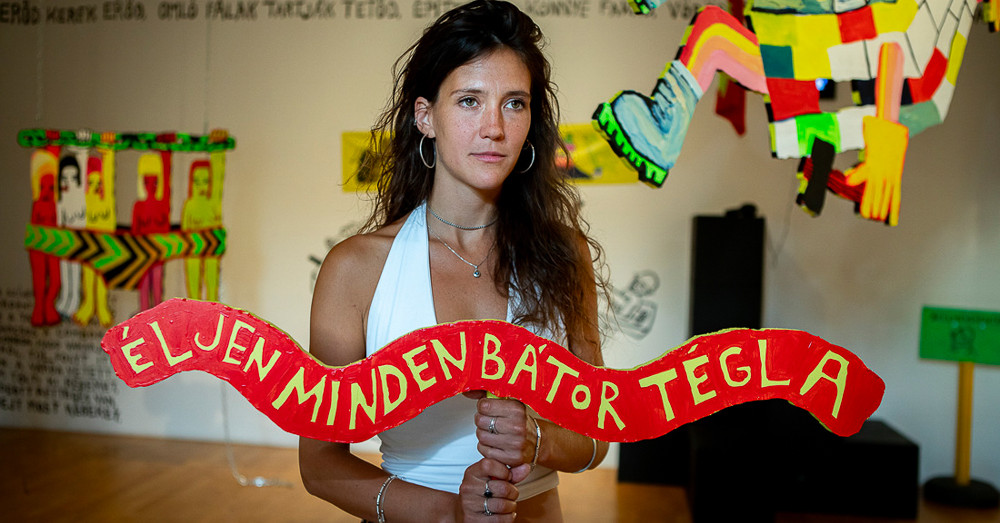
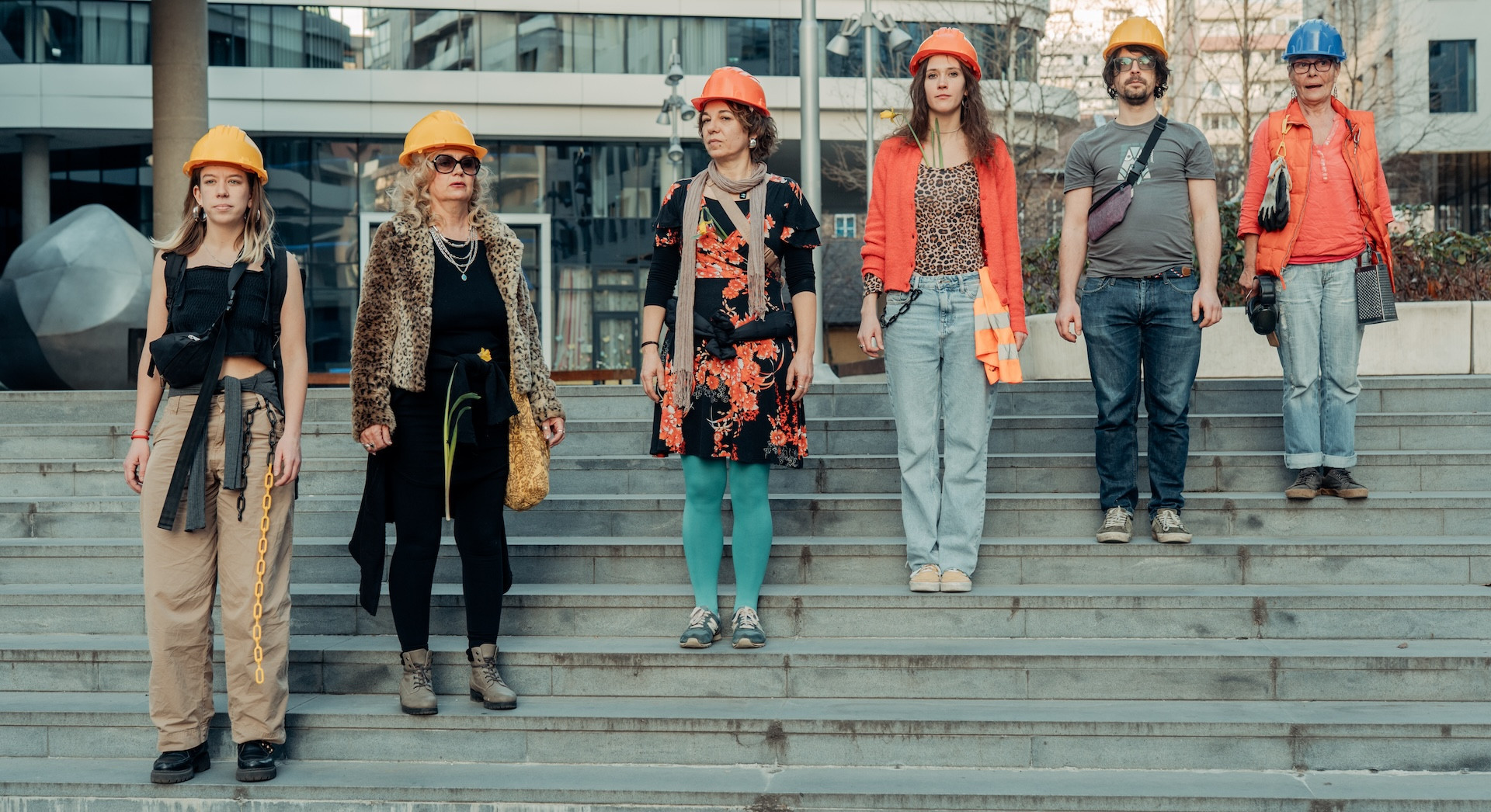
Within The End of Violence focus, we are repeating Dorottya Szonja Koltay's performance walk, created for NEXTFESZT's Women's Day feminist focus! Téglakar (Brick Choir) invites you to the streets with song, dance, and outspoken texts: a demonstration, procession, a public stand against violence toward women, led by the legendary figure of Kőmíves Kelemenné.
The Bricks, though silent, are not voiceless. They carry heavy stories and familiar songs. As long-standing parts of walls, the Bricks know Kőmíves Kelemenné’s sorrow intimately. They know her child too, who has grown tired of their mother’s silent grief—and now breaks the wall and its silence, both for her and alongside her.
Together with elements familiar from construction sites, they form a demolition ensemble: wheelbarrows are made to sing, trowels provide vocal accompaniment to the roar of the wrecking ball. The Bricks are working to unwall Kelemenné, through music and dance, aiming to create a space where no woman is bricked into a wall, where no fortress is built upon sacrifice and silence. Though they wield hammers, the tools are also used for their sound, to help loosen symbolic structures and entrenched systems. With their noise, they seek to soften the oppressive fortresses of our society. Their “This-One’s-for-You” performance is a practice in claiming space—a semi-open form that allows for participation, but doesn’t require it.
They use our shared memories of dance and song as raw material: beyond the dance-house traditions, they incorporate nursery rhymes, lullabies, work songs, protest songs, revue forms, and pop culture references into their working tools. In new situations and contexts, they aim to retune our heritage by building on existing layers of meaning. Their action is rooted in musical and interpretative play with folk and pop traditions. They don’t treat folk songs as fixed or untouchable forms, but as living, malleable traditions that fit the original, life-organizing and shaping role of folk art. They regard rap as a form of contemporary folklore.
Initiated by visual artist Dorottya Szonja Koltay and the curator Anna Seress, the Téglakar (Brick Choir) is currently a group of about 15 people (women and men mixed) who create performative forms by using democratic decision-making and the tools of community theatre, aiming for democratic decision-making, which they then activate in public space. Collective rapping, choreographies and songs are created in the process. Participants come from different helping professions, as well as from the community and alternative theatre worlds, mostly from both at the same time. Téglakar is a community where bricks are not silent. There are no crushed women in mortar, but there is no father-sacrifice either.


Collaborative partner: Kassák Museum