Cooking Sections
the House that Pigs built
Accompanying program
18 September 2026 (Friday) 20:30, Main Hall
19 September 2026 (Saturday) 20:00, Trafó Gallery, Main Hall
Conversation between Cooking Sections and historian and social scientist Hannah Landecker about their collaboration on the House that Pigs Built
Opening: 18 September 2026 (Friday) 6pm
On view: 19 September – 8 November 2026
Free entrance
Part of the transdisciplinary focus Rural–Urban Relations.
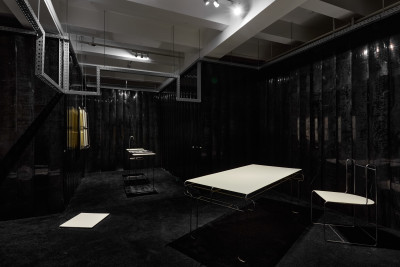
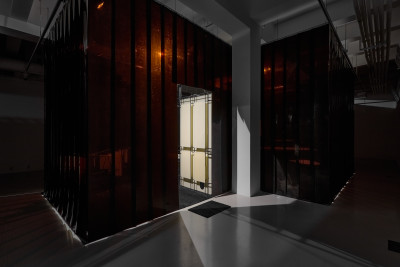
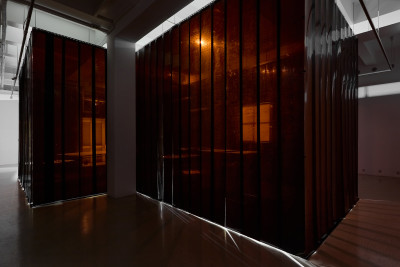
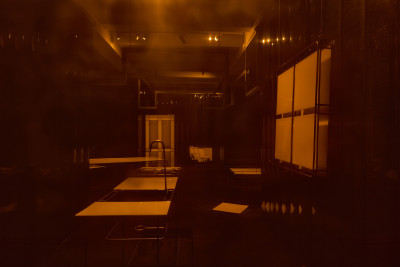
Cooking Sections (Daniel Fernández Pascual and Alon Schwabe) investigates the systems that shape the world through food, tracing the spatial, ecological, and political legacies of extractivism. They observe and analyze our transforming landscapes, the metabolic networks of industrial food production, and the impact of climate change on food systems. Using installations, performances, and video, their practice confronts the overlapping boundaries of art, architecture, ecology, and geopolitics. Based on several years of research conducted in collaboration with science historian Hannah Landecker, the exhibition at Trafó Gallery invites us to reconsider our relationship with industrial livestock farming and, more specifically, with pigs.
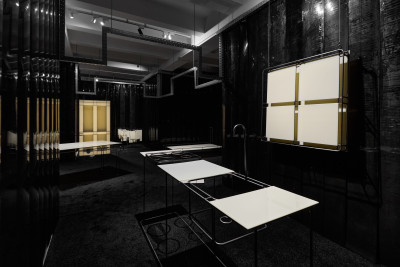
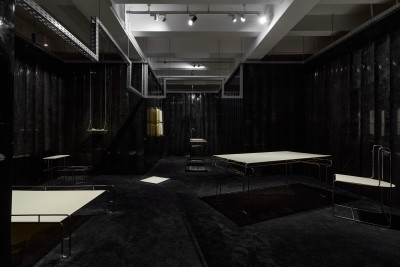
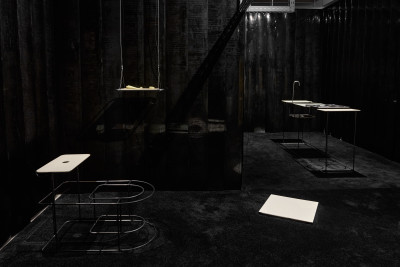
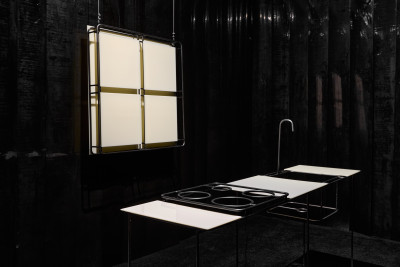
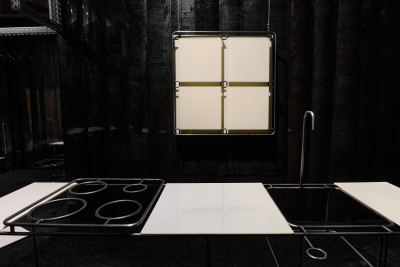
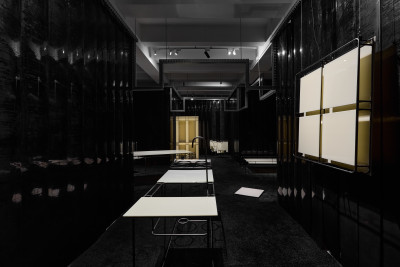
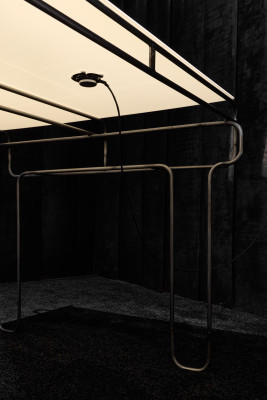
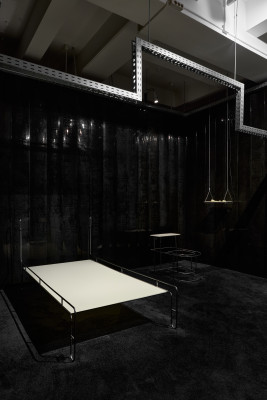
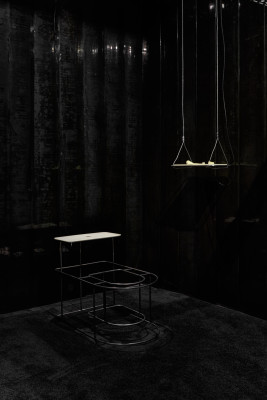
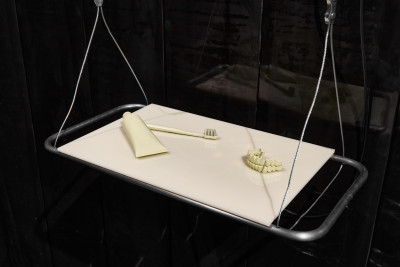
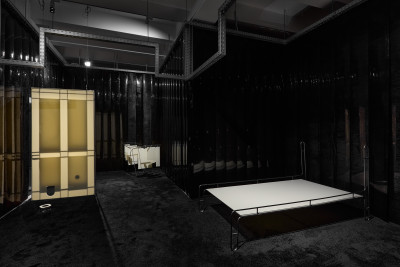
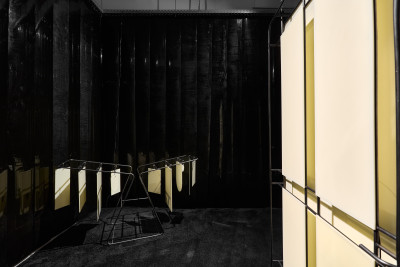
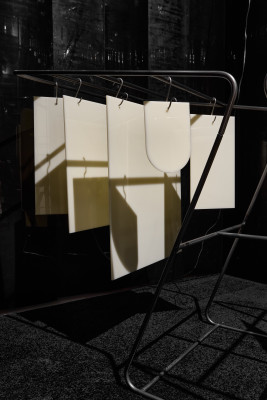
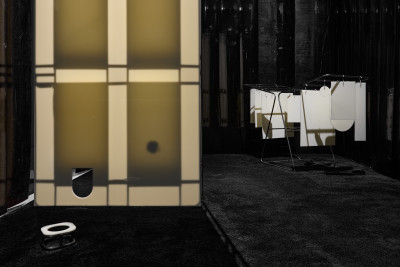
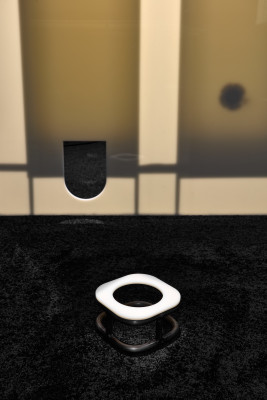
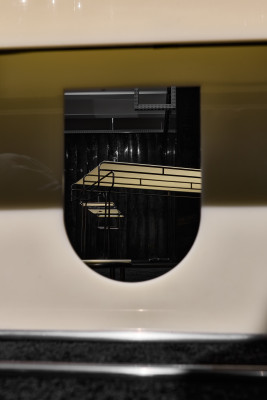
At Trafó Gallery, within a space that resembles a domestic environment, a cumulative tale unfolds through a variety of objects, giving voice to the invisible infrastructures that shape our everyday lives. A polyphonic chorus of furniture, household items, and architectural elements reveals how pigs’ bodies are transformed into the materials that shape and make our surroundings, and how this process, in turn, affects the bodies of pigs and the industries that “produce” them.
Industrial pig farming, which poses significant ecological risks, is generally considered important primarily from the perspective of food production. Yet these facilities do far more than produce meat products: their operations are deeply intertwined with the construction industry, chemical manufacturing, pharmaceuticals, cosmetics, and biotechnology. During the processing of animal renderings, organs, tissues, and various hormones are extracted from pigs for uses such as insulin production and the manufacture of anticoagulants. What remains of the animals’ bodies is further utilized by the construction industry. From superhydrophobic coatings and seamless finishes to concrete additives that improve flowability, the by-products of pig farming surround us in countless ways. These materials have played a significant role in shaping the aesthetics of our built environment; they help insulate buildings, soften our clothing, ensure the “frictionless” operation of transportation systems, provide viscosity to our toothpaste, moisturize and tighten our skin, and make pain-relief capsules easier to swallow. Over the past century, industrial animal farming and its processing industries have thus increasingly determined not only the materials around us, but also how we perceive the world and position ourselves within it.
Originally presented at MAPS – Museum of Art in Public Space in Køge, Denmark, the exhibition forms part of the long-term collaboration between Cooking Sections and Trafó titled Becoming CLIMAVORE. The climate crisis is transforming not only the four familiar seasons but also the seasons of production. This serves as the starting point for the collective’s ongoing CLIMAVORE project, launched in 2015, which advocates for a radical transformation of agricultural practices and food cultures. CLIMAVORE is a long-term, site-responsive project, exploring how to eat as humans, how it affects climate change and how to metabolise climate breakdown. CLIMAVORE uses cultural platforms to amplify civic resistance: to this end, they introduce new seasons that both draw attention to pressing local ecological issues and, through partnerships with various arts institutions, explore regenerative solutions and alternatives.
Cooking Sections was founded in London in 2013 by Daniel Fernández Pascual and Alon Schwabe. Their projects have been exhibited at institutions and events including Tate Britain, Serpentine Galleries, SALT Istanbul, Bonniers Konsthall in Stockholm, Carnegie Museum of Art in Pittsburgh, Lafayette Anticipations in Paris, HKW in Berlin, the Delfina Foundation in London, the Taipei Biennial, the 58th Venice Biennale, the Shanghai Biennale, the Los Angeles Public Art Triennial, the Sharjah Architecture Triennial, the Sharjah Biennial, Performa 17, Manifesta 12, the Folkestone Triennial, and Prospect New Orleans. They are Readers in Architecture and Spatial Practice at the Royal College of Art, London.
Cooking Sections was nominated for the Turner Prize in 2021, received the Special Prize at the 2019 Future Generation Art Prize and were nominated for the Visible Award for socially-engaged practices.
Supported by: Acción Cultural Española (AC/E), British Council, National Cultural Fund of Hungary, Káli Kövek