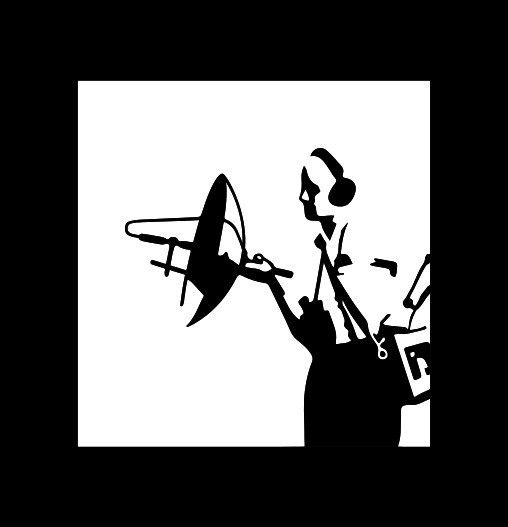
The young dance collective AHA is creating a new ‘set’ in collaboration with media artist Tamás Páll, which deals with one of the most invisible forms of violence, the burning issue of surveillance in both its physical and digital forms. With the rise of contemporary attention economy, being surveilled or tracked seems unavoidable, however the artists resist seeing this as a purely dystopian phenomenon and insist that it can also reveal glimpses of a world that does not yet exist. With their performance installation, they transform Trafó’s Club into a decentralized, shifting and unstable space, in which multiple perspectives and alternative realities unfold.
In our hypervisual world, attention is directed outward rather than inward. There is a constant battle for our attention, but we are not the ones being watched, much rather what we attend to is surveilled. What happens when, in a theater space, the plot is shaped not by the relationship of seeing and being seen, but by the suspicion that everyone present is being surveilled—actors and audience alike? How do we deal with this feeling and experience of surveillance? Who do we relate to when we feel surveilled? A virtual Other? Or our future selves? Can we hide from surveillance? Are there hiding spots on stage and in the theater space? And how can we benefit from the positive aspects of being watched: the freedom to imagine, to experiment with our relationships, to accept change?
In Set 4, the artists create a situation that engages with multiple perspectives and angles, radically decentralizing the events taking place in the enclosed theater. In this unusual choreographic time and space, the future has already begun and alternative realities are unfolding. Is it possible that everything we find suspicious and unsettling here and now is already a glimpse of the future?
Set 4 is the most recent chapter of AHA Collective's new site-specific performance series, which they started in 2024 and which consists of loosely structured events (‘sets’) with different themes that allow for more improvisation and freedom. They are characterized by a short but intense creation process based on instant decisions and a fixed structure, in which the performers are present individually, with their own decisions and agency. This working method gives them a chance to explore collective dynamics and enter unfamiliar and unknown artistic and performative situations, far from well-trodden paths.
In his essay The Critique of Violence, Walter Benjamin seeks to answer the question of whether there is such a thing as “divine,” “pure” violence that is lawful, just, and does not involve bloody sacrifice. The haunted aspect of Set 4 attempts to depict a form of violence that destabilizes, decentralizes, and disrupts long-standing, unquestioned (theatrical) norms. It calls out the objectifying gaze, disrupts the stable theatrical system of relationships, and does away with the logic of "to be or not to be," which is problematic because it seeks to exclude all "third," phantom-like, mysterious phenomena. This violence destroys what stabilizes the familiar and seeks to make impossible the possibility of a world that is not yet present.
 |
AHA Kollektíva |
 |
Creative Europe |
 |
S.T.A.G.E.S. |
 |
SÍN Művészeti Központ |
 |
Miniszterelnökség |















Hat fiatal a salzburgi táncművészeti egyetem elvégzése után úgy döntött, visszatér Budapestre és kollektívát alapít. Bátor tett ez a 2020-as évek Magyarországán, de köszönik, jól vannak, és hosszú távra terveznek. A kollektíva egyik tagjával, Piti Viviennel beszélgettünk. PUSKÁS PANNI INTERJÚJA.