Nothing About Us Without Us / Ink in Milk
Guided tour with the artists
The event is part of Trafó’s transdisciplinary focus NOTHING ABOUT US WITHOUT US.
On the 14th of November, from 6.30 pm Viola Fátyol and Ádám Ulbert, artists will give a guided tour of the exhibition in Hungarian, with Hungarian sign language interpretation.
The guided tour is free, all are welcome!
On view: 22 November 2025 - 11 January 2026
Exhibiting
artists: Leah Clements, Viola Fátyol, Jo Spence, Ádám Ulbert, Hac
Vinent, Gernot Wieland, Barbora Zentková&Julia Gryboś
Curated by Flóra Gadó, Judit Szalipszki
The exhibition is part of Trafó’s transdisciplinary focus NOTHING ABOUT US WITHOUT US.
The exhibition Ink in Milk
traces how vulnerability can give rise to new modes of resistance. The
works on display spring from different yet equally challenging life
experiences: some grapple with the conditions shaped by disability or
illness, while others open onto the fragile yet insistent—intimate,
personal, and political—realities of exhaustion and motherhood.
The
exhibition approaches vulnerability not as an individual failing but as
a social condition. As Canadian philosopher Shelley Tremain—whose work
draws on feminist critical disability studies—writes: "Seniors and
elders (...) aren’t inherently vulnerable; nor are disabled people in
institutions inherently vulnerable. Both of these groups (among others)
are rendered vulnerable. That is, they are made vulnerable.
Vulnerability isn’t a characteristic that certain individuals possess or
embody. Like disability, vulnerability is a naturalized apparatus of
power that differentially produces subjects, materially, socially,
politically, and relationally.”
In the works on display, the body emerges as an archive of constantly shifting relationships. Rather than focusing on resolving physically
or mentally demanding situations, the works illuminate strategies and
tactics that disrupt the hierarchies embedded within them. Beyond
questions of recovery or coping, they seek to reclaim personal agency,
confront ambivalences without necessarily resolving them, and develop a
language for narrating new situations—rooted in the personal yet shaped
by the broader social context.
The exhibition
highlights how various imaging strategies and photographic
techniques—X-rays, thermal imaging, ultrasound—often used in medical or
other power-laden contexts, can become effective tools for articulating
and presenting personal narratives that take shape in and through the
body. It invites us to consider how these methods, typically bound to
institutional authority, can be reclaimed as forms of self-assertion.
Within this framework, fragility appears not as a weakness but as a
resource; illness, mental strain, or exhaustion are not merely passive
states but potential sites of resistance, where slowing down or
withdrawing can itself be a political act.
The
works also bring to light experiences that are often taboo, hidden,
masked, or suppressed: the contradictory realities of motherhood, the
shame of mental breakdown, the sensory divergences stemming from
disability, or the sight of a body marked and exhausted by medical
intervention. Alongside questions of representation, visibility itself
emerges as a central concern. Individuals whose lives or capacities
diverge from normative expectations frequently oscillate between
hypervisibility and invisibility. Hypervisibility, in this context,
means being excessively scrutinized—becoming an object of attention,
even a spectacle—where difference is reduced to a single defining
feature, such as disability framing the way society perceives the
individual. Invisibility, by contrast, denotes not being seen at all:
the exclusion of non-normative bodies from public spaces, media,
cultural representation, and the social imagination.
Their
experiences, needs, and bodily realities are often ignored or dismissed
as irrelevant. The oscillation between these two poles highlights the
instability inherent in non-normative lived experience—not a simple
binary, but a continually shifting dynamic in which the individual is
never fully visible or invisible, moving instead along a spectrum of
exposure, blurring, and erasure depending on the context.
Image credit:
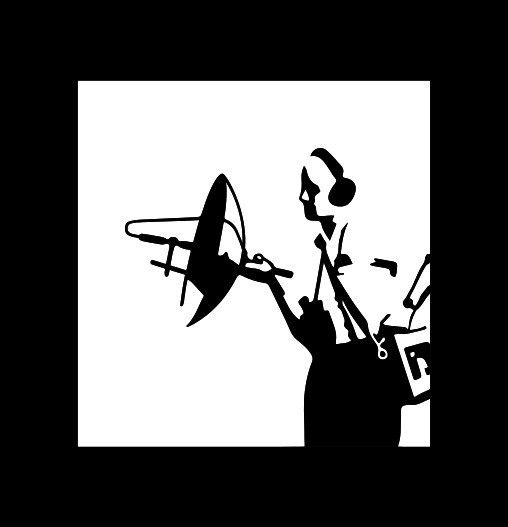
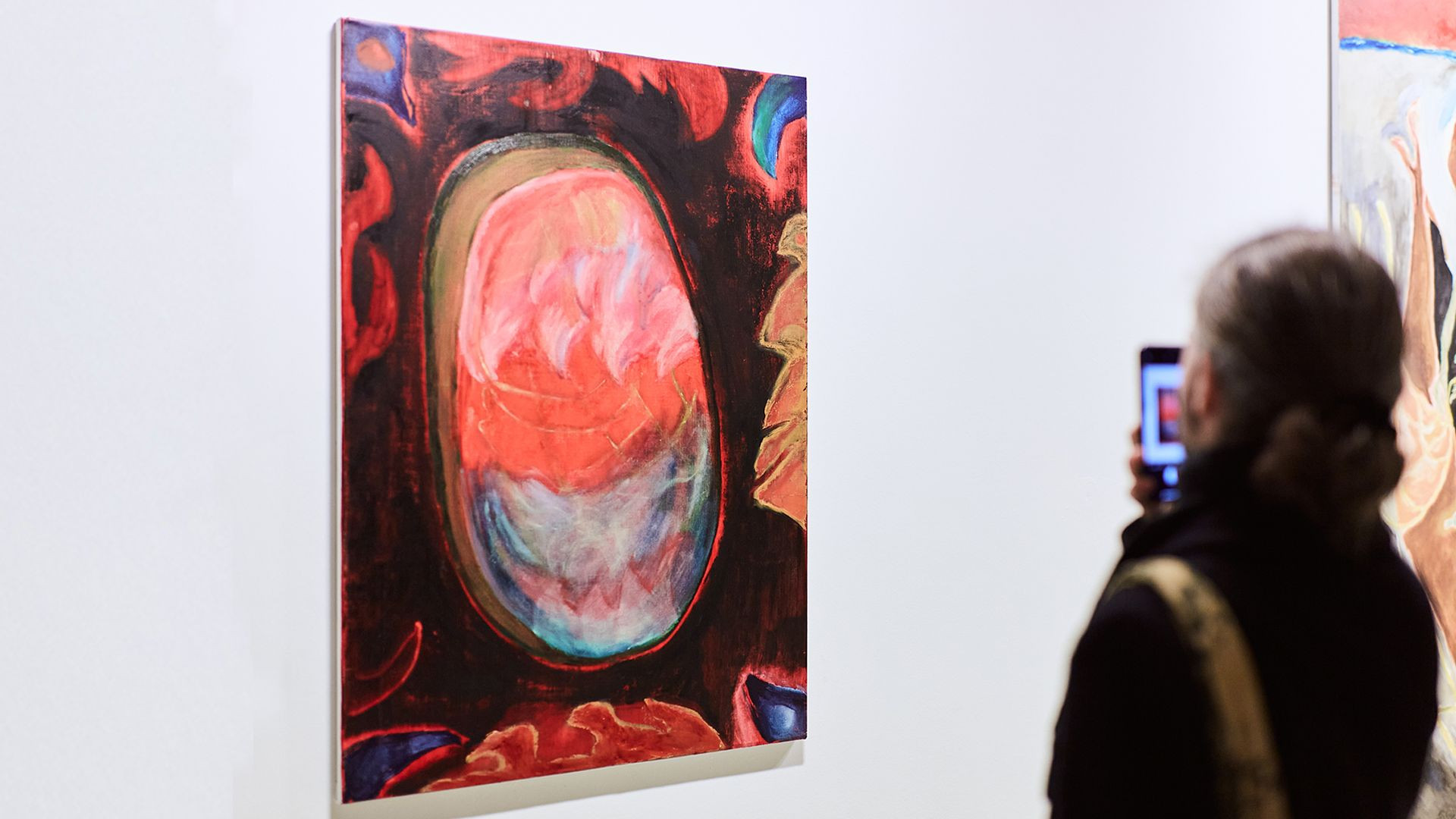
Ádám Ulbert: The Fisherman and his Bride, 2018; Perspectives from within, 2018. From the series Fables from the Ship of Fools. Photo: Krisztina Bilák