Nothing About Us Without Us / Kateřina Kolářová - Dániel Csángó - Lilla Lendvai - Beáta Sosity
CTRL+ALT+CRIP - Lecture & Discussion
Lecture and discussion about disability activism and crip theory from the postsocialist transition until today. Part of Trafó’s transdisciplinary focus Nothing About Us Without Us.
How has disability activism in Hungary developed from the postsocialist transition until today? In what ways do the region’s crip studies discourses differ from dominant Western narratives? A lecture and discussion with the founders of the CTRL+ALT+CRIP initiative, as well as researchers Kateřina Kolářová and Lilla Lendvai.
Participants:
- Kateřina Kolářová, researcher and author of Rehabilitative Postsocialism – Disability, Sex, and Race in Eastern Europe
- Beáta Sosity, PhD student at the Moholy-Nagy University of Art and Design, member of the Disability Studies Doctoral Workshop at ELTE BGGYK (Bárczi), and co-founder of the CTRL+ALT+CRIP Magazine
- Dániel Csángó, economist, social entrepreneur, inclusive university educator, wheelchair-using activist, and co-founder of the CTRL+ALT+CRIP Magazine
- Lilla Lendvai, assistant lecturer at the Institute of Intercultural Psychology and Education (ELTE PPK), member of the Disability Studies Doctoral Workshop at ELTE BGGYK (Bárczi); her research focuses on the intersections of disability and gender, with current studies examining Hungarian feminist disability activism.
In connection with the programme, Eva Egermann and Cordula Thym’s film C-TV (If I Tell You I Like You…) is screened in the Foyer between 5pm and 11pm (on 12th, 13th and 14th December).
The event begins with a short lecture by researcher Kateřina Kolářová, who will introduce her book Rehabilitative Postsocialism – Disability, Sex, and Race in Eastern Europe, published in June 2025. The volume offers a timely interdisciplinary and intersectional analysis of how disability, race, class, and gender operate as ideological tools within the postsocialist Czech Republic (formerly Czechoslovakia). Through feminist, queer, and crip perspectives, she shows how “rehabilitation” became a key concept in the region’s social transformations.
Kolářová will also reflect on the film C-TV (If I Tell You I Like You…) and discuss the possibilities inherent in “crip world-making” and the significance of imagining and creating a (media) environment that diverges from the codes of normative representation.
This will be followed by a discussion moderated by Beáta Sosity, featuring Kateřina Kolářová, Dániel Csángó, and Lilla Lendvai, who will review the recent history of disability movements in Hungary and Central and Eastern Europe, with particular attention to contemporary activist initiatives. The conversation will address the characteristics of the institutional system related to disability, as well as questions concerning accessibility and the politics of care.
They will also discuss the local context of crip studies – its emergence, challenges, and future possibilities – along with the intersections of disability with gender, sexuality, and social class. Bringing together scholarly, activist, and artistic perspectives, the discussion will also touch on the issue of cultural accessibility and the possibilities and responsibilities of cultural institutions in this area.
What would – what should – a crip institution look and operate like?
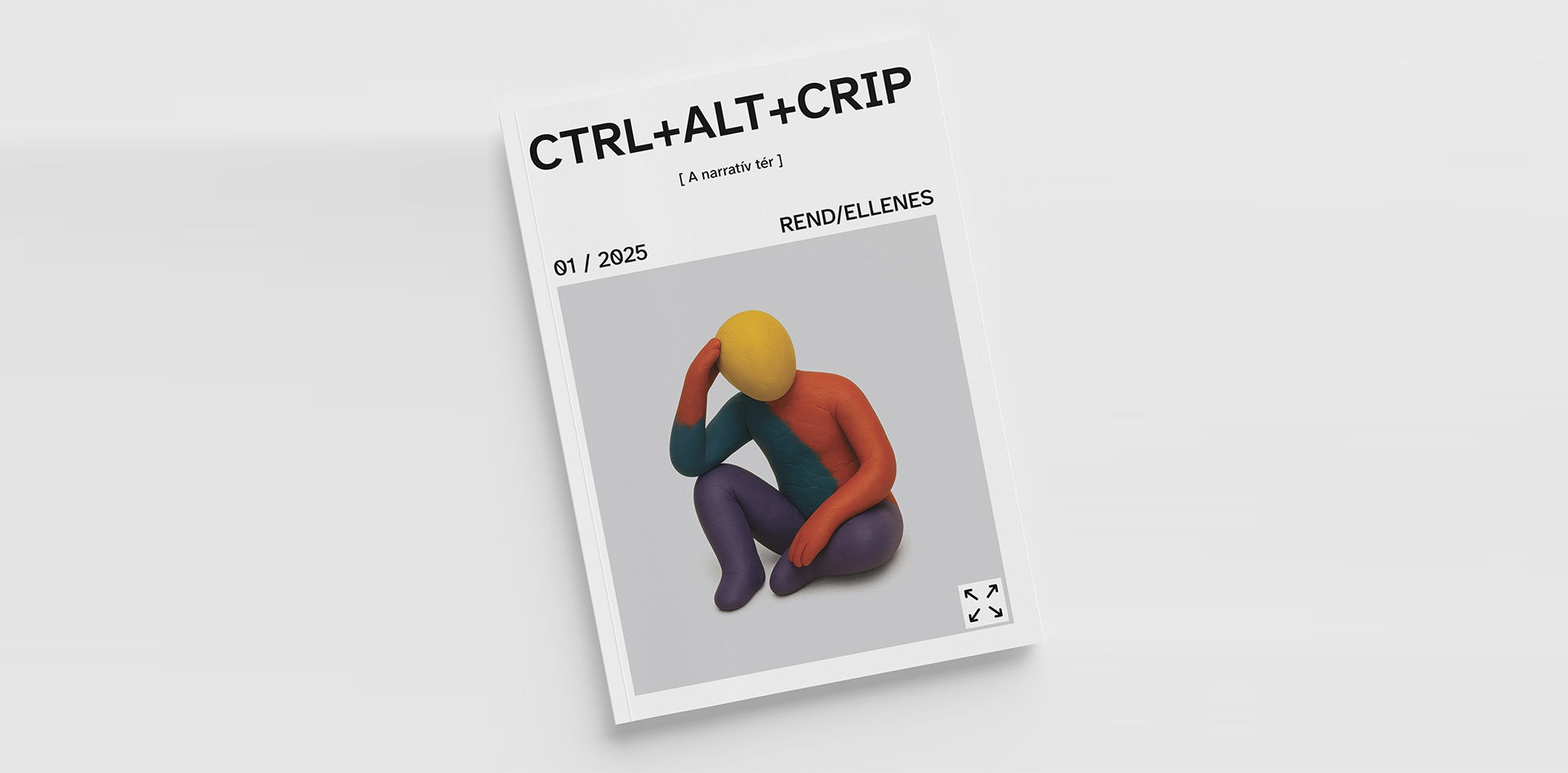
In the frameworks of the event, the founders of CTRL+ALT+CRIP Magazine will present their publication, which will be issued in print and digital formats in April 2026. The magazine creates a new regional platform for the theory and culture of crip studies; it focuses on disability, design, art, and technology, and the intersection of embodied and situated knowledge – in an accessible, simple, and easily understandable way.
In connection with the event, we also recommend the exhibition Ink in Milk at Trafó Gallery, on view until 11 January 2026. The exhibition draws on crip studies, as an important theoretical and aesthetic reference. In the exhibition space, visitors can browse zines and publications that explore states of illness and fragility, crip (critical disability studies) perspectives, community-building, self-organizing and grassroots practices of independent publishing. These publications – including previous issues of CRIP Magazine, Bed Zine, SICK Magazine, and zines from the What Can a HIV Doula Do? collective – resonate with the focus of CTRL+ALT+CRIP Magazine.