“The economy is too important to leave to the economists.” (Yanis Varoufakis)
“There is no heaven - we have to find what’s good for everyone here and now.” (Pumped Gabo)
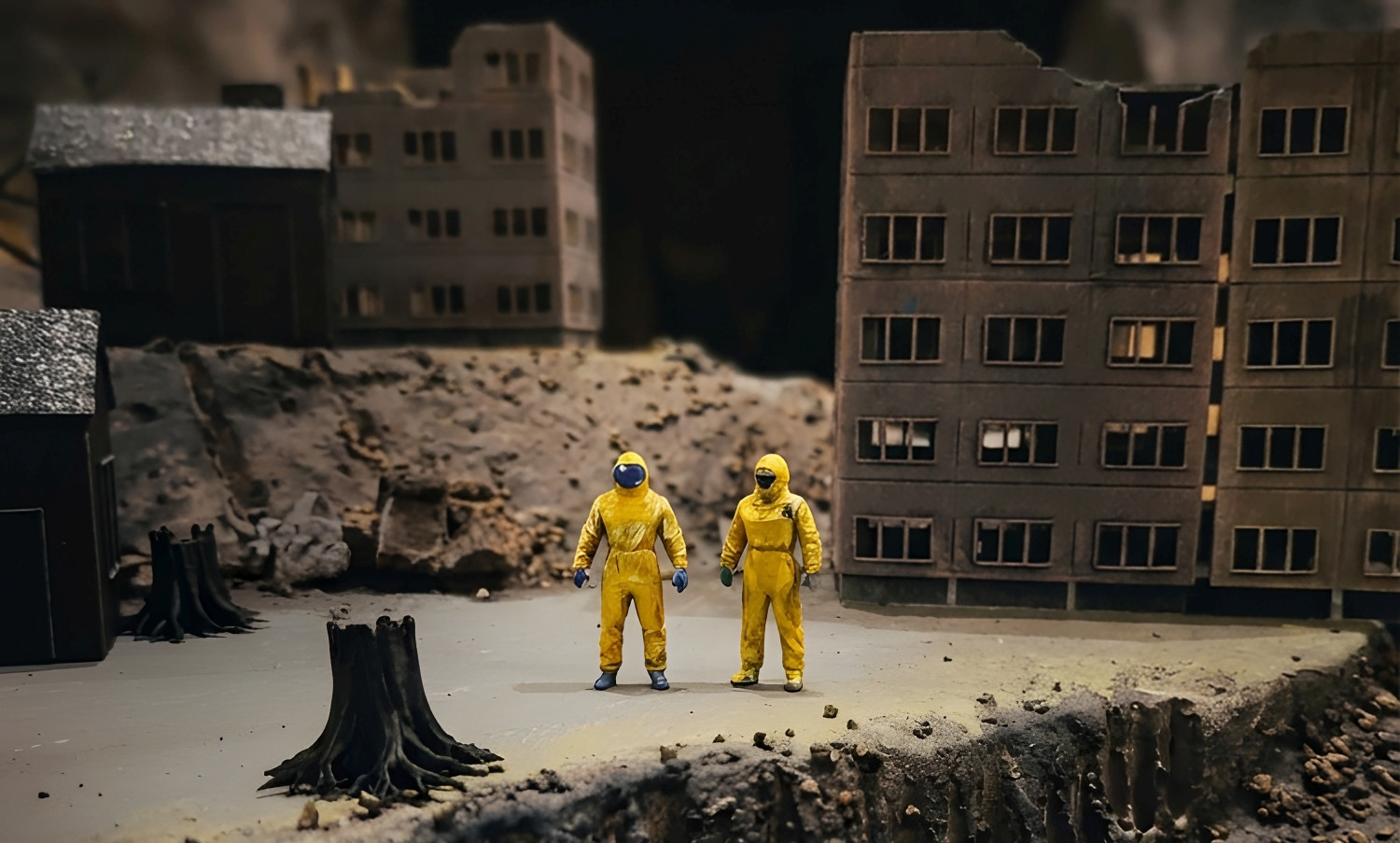
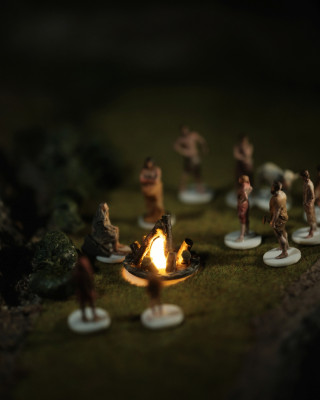
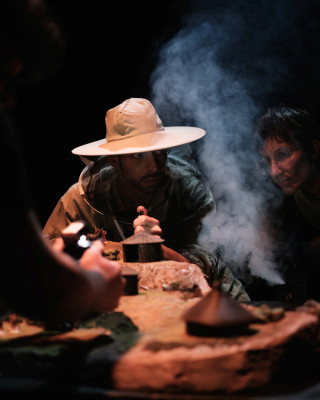
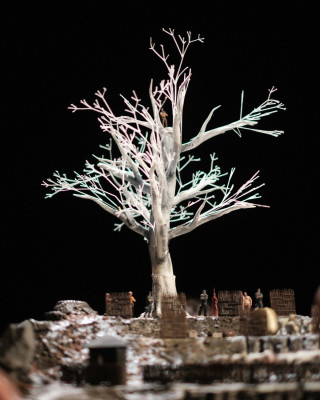
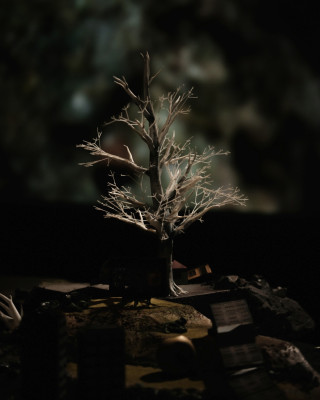
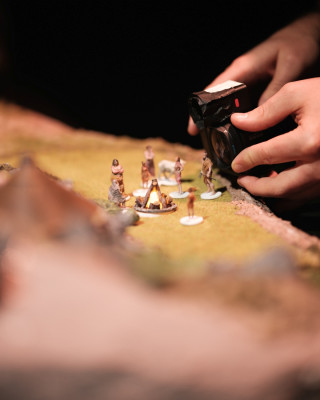
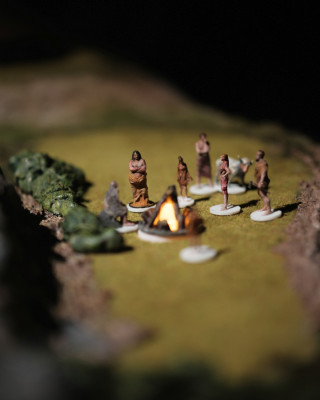
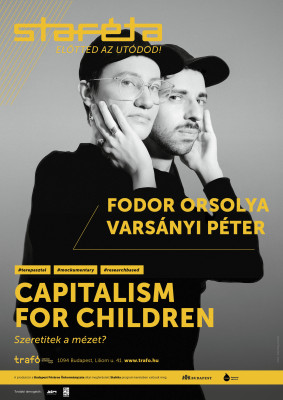
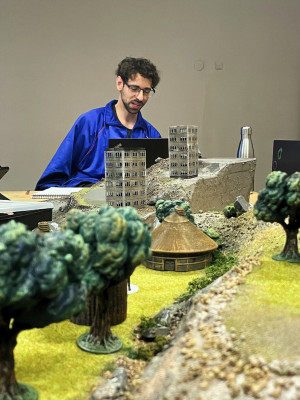
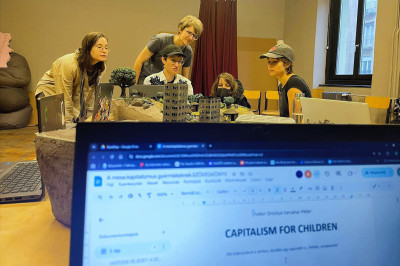
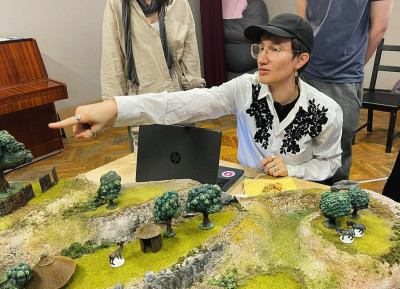
How would you explain the system we live in to a child? And would we be able to discuss it meaningfully? A fictional tribe accidentally invents capitalism through the appropriation of an apple tree. This gives rise to a research-based, tabletop lecture performance that unfolds before our eyes the functioning of the concepts of work, trade, and property.
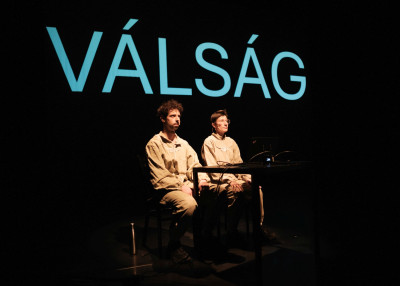
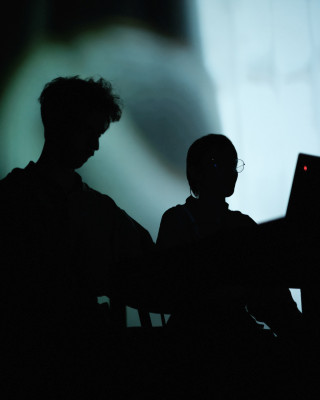
In their first collaboration, Orsolya Fodor and Péter Varsányi set out to understand capitalism. Like any serious research, this one also begins on Quora – and leads all the way to a tribe that accidentally invented capitalism. What happens when two naïve, pure-hearted puppet directors encounter a wild-capitalist tribe? Who colonises whom? What must a person do in life if they are Péter? And if they are Orsolya?
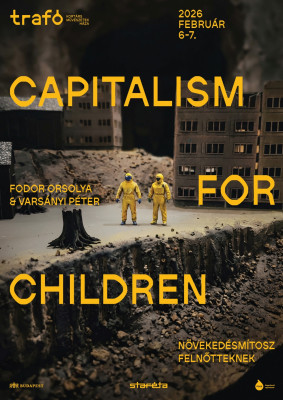
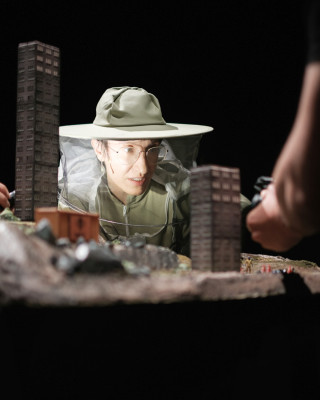
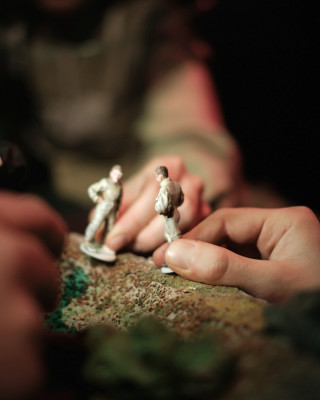
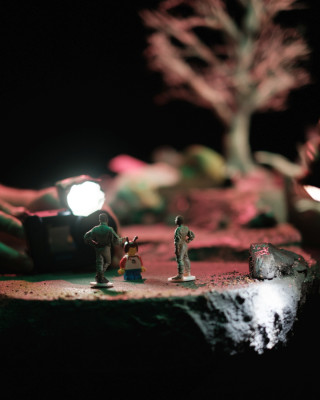
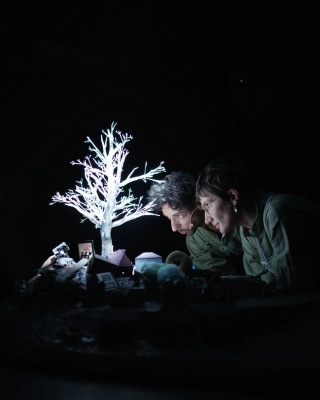
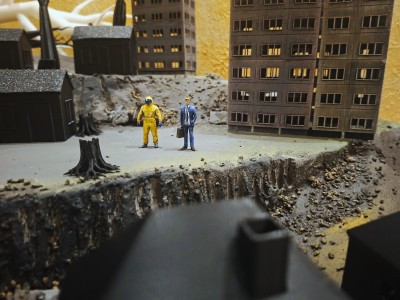
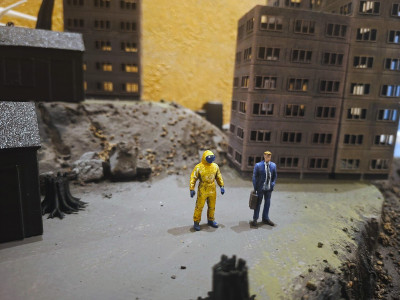
This time, the directors step onto the stage, using the power of their creative and research experience—and of their friendship—to rewrite the myth of capitalism. Combining video, tabletop miniatures, mockumentary, and lecture performance, the production explores what lies on the horizon of the system and beyond.
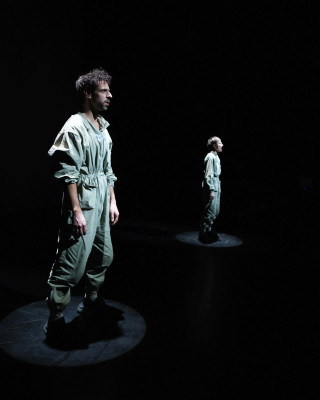
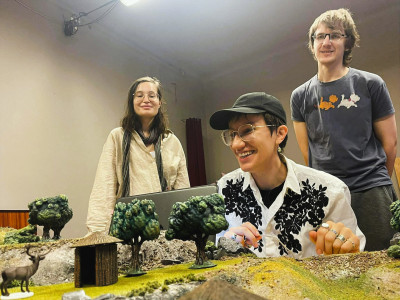
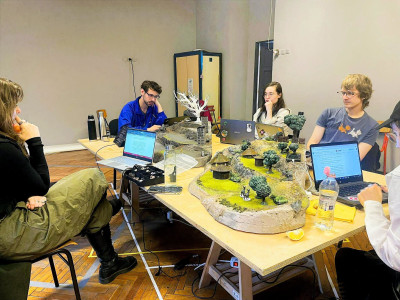
Orsolya Fodor (1994) is a theatre-maker currently living in Budapest. Alongside her freelance work as a puppetry director, dramaturg, and teacher, she creates in various non-hierarchical collaborations. She is interested in collective forms of authorship and creation, and the ways these influence one another. In her work, she places great emphasis on mutual learning and the continuous transformation of artistic identity. She is currently pursuing her doctoral studies at the University of Fine Arts, researching how performative interventions affect the sacred language of space. Beyond the possibilities of found spaces, she is drawn to autofictional formats as well as puppet and figure theatre as a philosophical language. Her most personal work, Johanna, takes place in an empty swimming pool, where she examines the identity-shaping power of vulnerability through her own religious past in the form of a vision–lecture performance.
Péter Varsányi (1993) is a Budapest-based writer-director and theatre-maker. He graduated from the SZFE theater directing program in 2017, specializing in puppet theater. His early career was characterised by indirect personal expression and formal diversity, explored through novel and fairy-tale adaptations. He associates his artistic paradigm shift with 333: a Lecture on Fairy Tales, presented at Trafó to wide critical attention. In this performance, hermeneutics and fairy tale therapy met the genre of lecture performance. It was then that his interest turned to post-dramatic forms, direct personal expression, and research-based, community-based creation. He likes to think of theatre as a space for collective thinking and collective care—his first research-based performances for young audiences revolve around the themes of stage fright, attention economy, and attention care. He is a PhD student at the Mozarteum University in Salzburg.




















Fodor Orsolya és Varsányi Péter február 6-án a Trafóban mutatja be első közös színházi projektjét, a Staféta program támogatásával létrejött Capitalism for Childrent. Az előadás kapcsán színházról, kapitalizmusról és azok metszéspontjairól beszélgettem velük. SZABÓ RÉKA DOROTTYA INTERJÚJA.